In recent years, both airline operations and everyday travel planning have grown significantly more complex. Airlines face strict scheduling, demanding crew rotations, and global network pressures, while travelers expect fast search results, transparent fares, and reliable information. Behind all of this is one core challenge: aviation still relies heavily on scattered systems built decades ago.
Today, smarter, more connected flight search platforms are changing how both airlines and travelers navigate modern travel. By improving accuracy, speed, and visibility, these systems reduce operational friction and deliver a smoother experience for everyone involved — from crew teams to everyday passengers.
Why Airlines Need More Intelligent Search Tools
Airlines operate in real time. Decisions around routes, timing, and crew placement must be updated instantly to keep operations efficient and safe. Traditional systems, however, often provide:
-
Delayed schedule updates
-
Manual searches for alternative routes
-
Limited visibility into real-time availability
-
Inconsistent fare data across tools
This creates unnecessary pressure on operations teams, crew travel desks, and flight controllers.
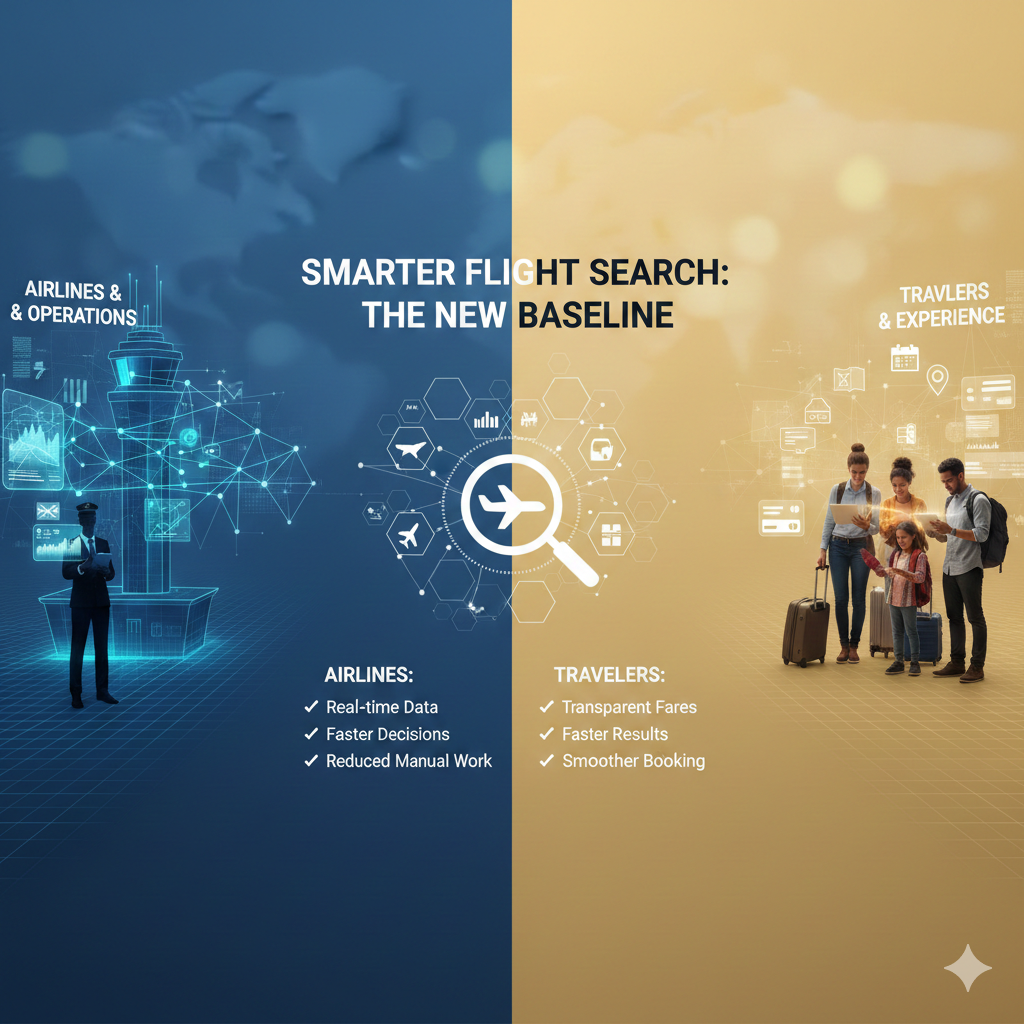
Smarter flight search platforms offer stronger advantages:
✔ Real-time availability and accurate schedules
Live API connections ensure that all flight data — delays, aircraft swaps, cancellations — is current.
✔ Faster decision-making for operational disruptions
When disruptions happen, rebooking can be done in minutes instead of hours.
✔ Access to multiple airline inventories in one place
Teams don’t need to jump between different portals to compare options.
✔ Reduced manual workload
Better tools mean fewer emails, fewer phone calls, and faster solutions during peak times.
For airlines, efficiency is measured in seconds — and modern tech can reduce those seconds significantly.
Why Travelers Benefit from Smarter Search Systems Too
For regular travelers — including corporate passengers, families, and solo flyers — the biggest frustration is often rooted in outdated search results:
-
Prices change mid-booking
-
Seats disappear
-
Hidden fees appear at checkout
-
Website crashes or slow loads
-
Confusing routing information
Smart search systems eliminate much of this noise.
Better technology delivers a better travel experience:
✔ More transparent fares
Travelers see what they’ll actually pay — no surprises.
✔ Faster results
Improved systems cut down search times dramatically.
✔ Cleaner comparison tools
Travelers get clear information on routes, timings, and options.
✔ Reduced booking errors
Live data minimizes issues like unavailable seats or outdated prices.
✔ A smoother, more modern experience
People expect the same speed and usability they get from banking apps, food delivery services, and streaming platforms — travel shouldn’t be an exception.
The Intersection: Where Airline Operations and Traveler Needs Meet
The aviation world is unique because airline staff and travelers actually depend on the same foundational data:
When the underlying system is outdated, both sides suffer.
When the system is modern and connected, both sides benefit.
This is why the global shift toward smarter search architecture matters — it lifts the entire ecosystem.
Platforms Built for the New Era of Travel
Modern travel platforms — designed with APIs, automation, and centralization — offer solutions far beyond traditional booking tools. They allow businesses, airlines, and travelers to share the same real-time foundation.
These platforms can:
-
Access global airline content instantly
-
Pull live hotel and transfer availability
-
Automate comparison logic
-
Reduce errors across all stages
-
Provide a unified, reliable experience
They don’t replace airline systems, but they fill critical gaps by simplifying how travel is found, compared, and confirmed.
Final Thought
Airlines and travelers may seem to navigate different worlds, but they share one essential requirement: clarity.
The aviation industry is moving toward faster, more accurate, more connected platforms — and this shift benefits everyone involved.
As travel demands increase and global operations grow more complex, smarter search systems are no longer a luxury.
They’re the new baseline for an industry that depends on precision, speed, and trust.